Forecasting Enzyme Demand for Assay Kit Production Runs
For a diagnostic reagent manufacturer, enzyme purchasing is not a simple reorder event. It is tied to kit forecasts, QC release timing, stability claims, production yield, expiry policy, supplier lead times, and change-control discipline.
A strong forecast reduces two risks at once: production interruption from short supply, and write-off exposure from excess inventory. The objective is not just to buy enough enzyme. It is to maintain qualified, documented, compatible enzyme supply across planned kit builds without creating avoidable expiry pressure.
Vitreline supports manufacturers that need a bulk enzyme supplier for diagnostic reagent manufacturing with predictable lots, documentation packages, and procurement-ready supply planning.
Start with the production schedule, not the purchase order
Enzyme demand should be calculated from the production plan before procurement dates are assigned. Start with confirmed and forecasted kit builds, then translate that plan into enzyme requirement by SKU, reagent format, fill configuration, and expected manufacturing yield.
A practical demand model should include:
- Planned kit quantities by month or quarter
- Enzyme requirement per batch or production campaign
- Expected production yield and in-process loss allowance
- QC reserve and retain sample requirements
- Validation, bridging, or engineering batch needs
- Stability pull requirements, if applicable
- Open orders, allocated inventory, and released stock
This creates a manufacturing-driven forecast. Procurement can then layer in supplier lead time, lot availability, release documentation, and inbound inspection timing.
Build the forecast around released, usable inventory
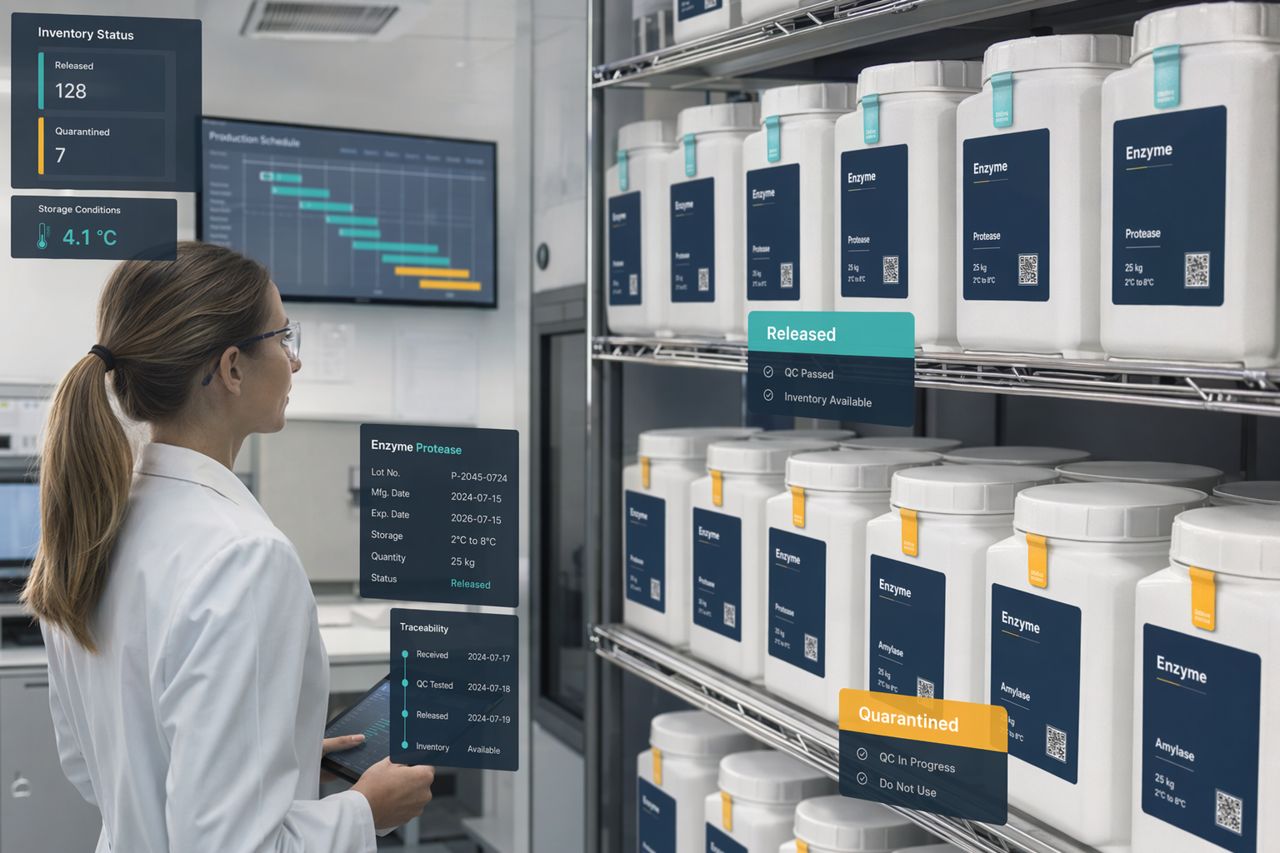
Inventory on hand is not always inventory available for production. Enzyme stock may be physically present but not yet released by incoming QC, not assigned to the right formulation, or not aligned with expiry requirements for the finished kit.
Separate inventory into clear categories:
- Quarantined material awaiting review
- Released material available for production
- Allocated material reserved for scheduled builds
- Material restricted by expiry window
- Retains, reserves, and non-production stock
This distinction prevents false confidence. It also helps procurement and manufacturing agree on when a reorder is actually required.
Account for supplier lead time and internal release time
The reorder date should include more than the supplier shipment timeline. Diagnostic reagent manufacturing often requires internal steps after receipt.
Plan for:
- Supplier production or allocation lead time
- Shipping and import handling, where applicable
- Receiving inspection
- Documentation review
- Incoming QC release
- ERP availability and warehouse assignment
- Any internal formulation confirmation before campaign use
A reagent production line can be delayed even when material arrives on site if documentation or release steps are incomplete. The best forecast treats usable date as the milestone, not delivery date.
Set reorder triggers by consumption and risk
A reorder trigger should reflect actual consumption rate, forecast volatility, and the operational impact of a stockout. For critical enzymes used across multiple kits, a static minimum quantity may not be enough.
Useful trigger inputs include:
- Average monthly consumption
- Peak campaign demand
- Confirmed orders versus forecast demand
- Supplier lead time variability
- Internal QC release duration
- Shelf-life remaining at receipt
- Qualification status of alternate lots or suppliers
- Cost and likelihood of expedited replenishment
For high-impact enzymes, a time-based trigger often works better than a quantity-only trigger. For example, procurement may trigger replenishment when released inventory falls below the next defined production horizon plus safety stock coverage.
Use safety stock carefully
Safety stock protects continuity, but it can also increase expiry and obsolescence risk. The right level depends on demand stability, supplier responsiveness, and the usable shelf-life of the enzyme in your process.
A controlled safety stock policy should answer four questions:
- What production period must be protected?
- How much demand variability is expected?
- How long does replenishment and internal release take?
- What expiry window is acceptable for the intended kit shelf-life?
For enzymes with shorter usable windows, safety stock may need to be smaller and replenished more frequently. For platform enzymes used across multiple kits, larger buffer stock may be justified if inventory can be consumed predictably.
Forecast expiry exposure before placing bulk orders
Bulk purchasing can improve availability and price control, but only if the material can be consumed within the approved inventory policy. Expiry exposure should be forecast before order release.
Review:
- Planned consumption before expiry
- Required remaining life at time of formulation
- Required remaining life at finished kit release
- Stability commitments tied to finished product dating
- Risk of demand shifts or delayed campaigns
- Ability to split shipments or reserve future lots
When expiry risk is high, procurement can discuss staged deliveries, lot reservation, or production-aligned release schedules with the enzyme supplier.
Align enzyme lots with assay compatibility and change control
Forecasting is not only a quantity exercise. It is also a lot-control exercise. Introducing a new enzyme lot too close to production can create avoidable risk if internal comparability work, documentation review, or release decisions are not complete.
A better approach is to plan lot transitions before existing stock is depleted. This gives technical, quality, and procurement teams time to review documentation and confirm fit for the intended reagent system.
Lot transition planning should include:
- Current lot depletion forecast
- New lot availability date
- Documentation package review timing
- Internal comparability or bridging schedule, if required
- Approved change-control pathway
- First production campaign using the new lot
- Contingency plan if release is delayed
This is especially important for manufacturers with regulated documentation expectations and multi-site production planning.
Define supplier communication points
Enzyme supply is easier to manage when forecast updates are shared before demand becomes urgent. A supplier does not need complete commercial detail, but they do need enough visibility to plan lot allocation and production support.
Recommended communication points include:
- Rolling forecast updates
- Expected order windows
- Required documentation expectations
- Target delivery or release-readiness dates
- Lot reservation needs
- Packaging and shipment preferences
- Change notification requirements
This improves supply reliability and reduces the chance of last-minute substitutions.
Procurement checklist for enzyme demand planning
Use this checklist before placing or updating a bulk enzyme order:
- Is the demand forecast tied to the latest production plan?
- Is inventory counted by released, usable stock rather than physical stock only?
- Are open purchase orders included in the supply view?
- Does the reorder date include internal QC and documentation review?
- Is safety stock matched to lead time and demand variability?
- Has expiry exposure been reviewed against planned consumption?
- Are lot transition and change-control steps scheduled?
- Are supplier documentation requirements confirmed?
- Is there an escalation plan for demand spikes or production pull-ins?
How Vitreline supports forecast-driven supply
Vitreline works with diagnostic reagent manufacturers that need enzyme supply to fit production planning, quality release, and procurement control.
We support:
- Bulk enzyme supply planning for assay kit production
- Lot-level documentation for supplier qualification workflows
- Consistent communication around availability and lead times
- Packaging and shipment alignment for manufacturing use
- Lot transition support and change-control awareness
- Forecast discussions for recurring or campaign-based demand
The result is a supply relationship that supports production continuity, not just transactional purchasing.
Request a quote
If you are planning assay kit production and need reliable bulk enzyme supply, contact Vitreline with your target enzyme, expected production schedule, documentation needs, and desired delivery window.
Request a quote using the on-site contact form