Scale-Up Checkpoints When Moving an Assay Kit from Pilot Batches to Routine Production
Pilot batches prove that an assay kit can be built. Routine production proves that it can be built repeatedly, released on schedule, and supported by qualified suppliers.
For diagnostic reagent manufacturers, scale-up is not only a formulation question. It is a purchasing, receiving, labeling, documentation, inventory, and change-control exercise. Enzyme supply becomes a controlled manufacturing input, not a lab purchase.
Vitreline supports diagnostic reagent manufacturers that need bulk enzyme supply aligned with routine IVD reagent production, QC release, and supplier qualification.
Why enzyme supply changes at scale
Small pilot lots can tolerate manual follow-up, flexible packaging, and one-off purchasing. Routine production cannot.
As batch frequency increases, enzyme supply must support:
- Confirmed lead times for planned production windows
- Lot-to-lot consistency for assay continuity
- Clear documentation for incoming quality review
- Packaging formats compatible with reagent manufacturing workflows
- Retained sample and traceability expectations
- Supplier communication before changes occur
- Inventory labeling that protects material status and expiry control
The checkpoint is simple: if an enzyme input appears in the batch record, it needs a manufacturing-grade supply plan.
Checkpoint 1: Convert pilot demand into purchasing quantities
Pilot demand is often expressed as immediate material need. Routine production requires forecast structure.
Before placing bulk orders, align internally on:
- Expected kit volume by quarter
- Planned batch frequency
- Safety stock policy
- Minimum inventory position
- Target reorder point
- Qualified backup material strategy, if applicable
- Required approval route for new lots
Purchasing should not be asked to buy enzyme material without a production forecast and release timeline. Quality should not be asked to approve incoming lots without advance notice of order frequency and documentation needs.
For the supplier, forecast visibility supports lot planning, allocation, and shipment timing. For the manufacturer, it reduces avoidable expedited freight, emergency qualification work, and production schedule risk.
Checkpoint 2: Define receiving inspection before the first routine shipment
Receiving inspection should be documented before scale-up orders begin.
A routine incoming review may need to confirm:
- Supplier name and approved supplier status
- Material name and internal item code
- Supplier lot number and Vitreline lot reference
- Quantity received against purchase order
- Packaging integrity
- Storage condition on arrival
- Certificate of analysis availability
- Safety data sheet availability
- Expiry or retest date
- Required quality or regulatory statements
- Deviation or temperature excursion handling process
The goal is to prevent ambiguity at the dock. If receiving, quality, and production use different material names or lot references, traceability gaps can appear before the first batch is made.
Checkpoint 3: Build batch documentation around traceability
Routine reagent manufacturing depends on batch records that can be reviewed quickly and defended later.
For enzyme inputs, batch documentation should connect:
- Purchase order
- Supplier shipment documents
- Receiving inspection record
- Internal material label
- Internal inventory transaction
- Production batch record
- QC release record
- Retained sample reference, where required
This traceability chain matters when investigating performance trends, customer complaints, stability observations, or supplier changes.
A bulk enzyme supplier for diagnostic reagent manufacturing should make lot identification clear and documentation consistent. This reduces administrative friction during batch release and supplier audits.
Checkpoint 4: Standardize inventory labeling and material status
At pilot stage, materials may be tracked manually. At routine production, labeling must support controlled use.
Define label requirements for:
- Internal item code
- Material description
- Supplier lot number
- Internal lot number, if assigned
- Receipt date
- Expiry or retest date
- Storage condition
- Quantity or container count
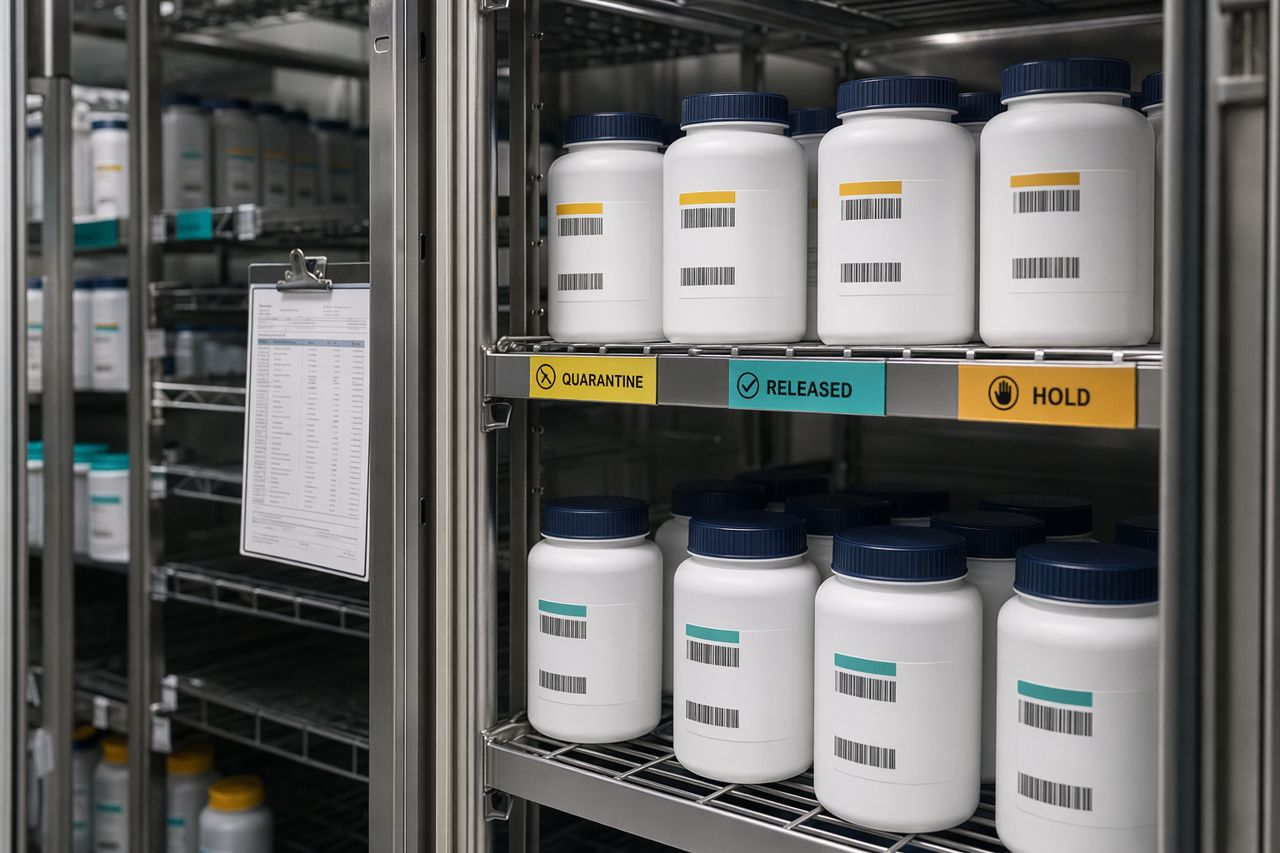
- Status: quarantine, released, rejected, expired, or hold
- Handling restrictions
Inventory teams should be able to identify what can be used, what is waiting for release, and what must not enter production.
This is especially important when multiple lots are present during transition periods. Clear labels help prevent unintended lot mixing and simplify line clearance.
Checkpoint 5: Confirm packaging fit for production handling
Bulk enzyme supply should match the way the reagent line actually runs.
Discuss packaging needs before the first scaled order:
- Container size preference
- Single-use or multi-use container expectations
- Frozen, refrigerated, or controlled storage workflow
- Thaw and handling planning at production scale
- Container closure and tamper-evidence needs
- Label placement and readability
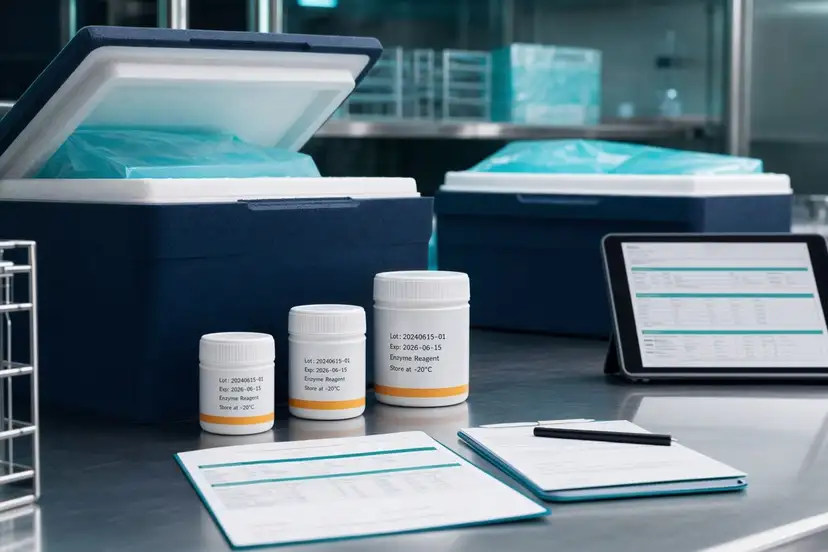
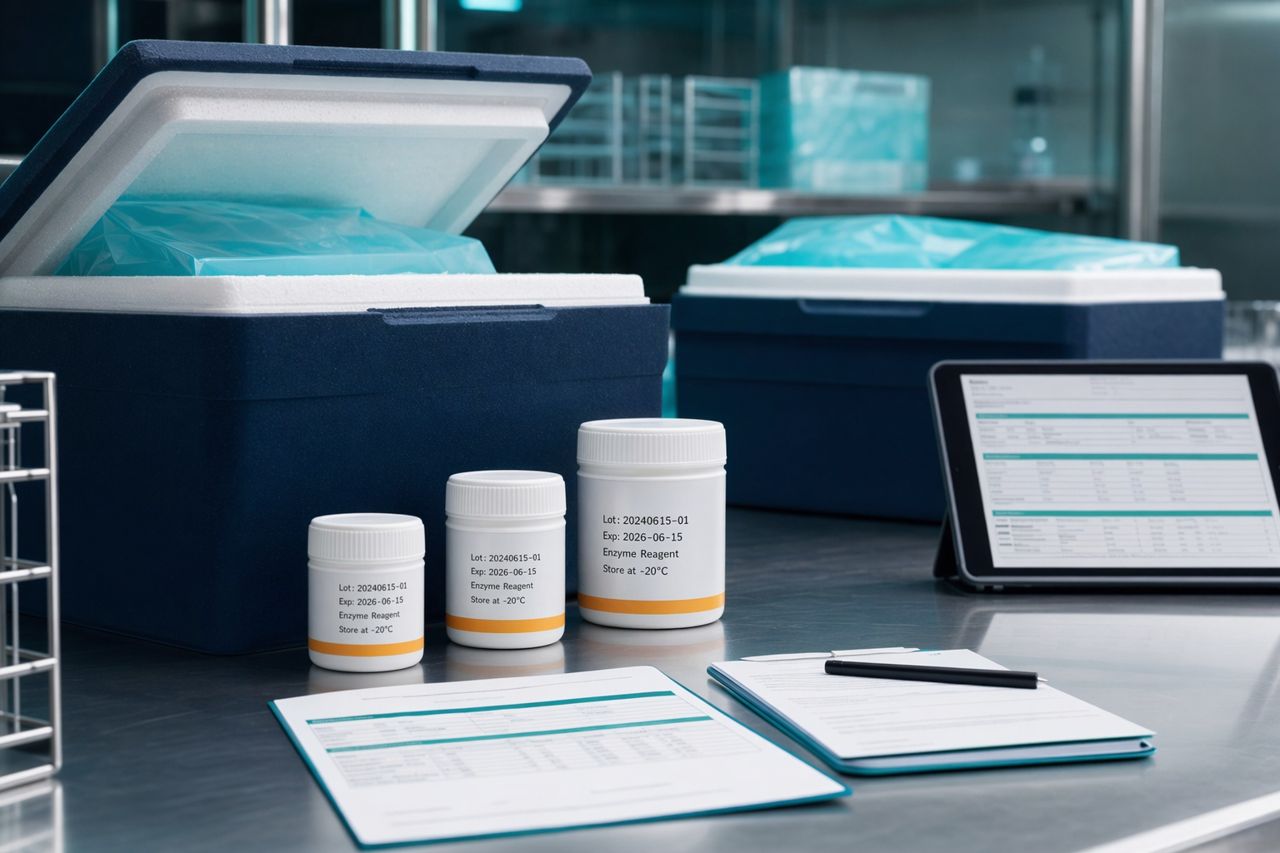
- Shipment configuration for receiving and warehousing
The best package is not always the largest. It is the package that reduces handling risk, supports batch sizing, and fits the manufacturer’s storage and dispensing process.
Checkpoint 6: Lock the documentation package
Supplier documentation should be known before routine production. Do not wait until quality release is blocked.
Typical documentation may include:
- Certificate of analysis
- Safety data sheet
- Lot-specific identification details
- Origin or manufacturing statements, where applicable
- Allergen or animal-origin statements, if required by the manufacturer’s file
- Change notification expectations
- Shelf-life, retest, or storage statements
- Supplier quality questionnaire responses
Different diagnostic reagent manufacturers have different supplier files. The practical checkpoint is to define the document list before purchase order release.
Vitreline works with technical, quality, and procurement teams to align documentation expectations before enzyme lots are committed to production.
Checkpoint 7: Plan lot transition before the current lot runs out
Routine production should not discover a new enzyme lot at the point of stockout.
A controlled lot transition plan can include:
- Advance reservation of future lots
- Early shipment for internal evaluation
- Clear comparison against the current production lot
- Defined approval responsibilities
- Documentation review before release
- Inventory separation during evaluation
- Approved use date for the new lot
Lot transition is a manufacturing event. Treat it as planned work, not an emergency purchase.
Checkpoint 8: Define supplier change-control communication
Diagnostic reagent manufacturers need advance notice when supplier-side changes may affect qualification files, documentation, or assay compatibility.
Change-control expectations should address:
- Material specification updates
- Manufacturing site changes
- Process changes
- Raw material source changes
- Packaging changes
- Labeling changes
- Documentation format changes
- Shipment condition changes
- Discontinuation or long lead-time risk
Procurement and quality should both know how change notices are received, reviewed, and escalated.
The supplier relationship should make change communication predictable. Silence is not a control strategy.
Checkpoint 9: Align procurement terms with quality requirements
A purchase order alone may not capture manufacturing risk.
Before routine production, confirm:
- Forecast horizon
- Order minimums and planned release quantities
- Lead time expectations
- Reserved lot options
- Shipment documentation requirements
- Approved delivery locations
- Required certificates and statements
- Contact route for technical or quality questions
- Escalation path for urgent production needs
Procurement-ready supply means the commercial process supports the quality process. Both need the same lot, documentation, and timing assumptions.
Checkpoint 10: Review scale-up readiness as a cross-functional team
The enzyme supply plan should be reviewed by the functions that will use it.
Include:
- Manufacturing
- QC
- Quality assurance
- Procurement
- Supply chain planning
- R&D or technical transfer
- Regulatory or documentation owner, where applicable
A short readiness review can identify gaps before they become batch delays.
Use the review to confirm:
- Approved supplier status
- Approved item codes
- Document package completeness
- Receiving inspection criteria
- Storage and handling instructions
- Inventory labeling rules
- Lot transition plan
- Change-control route
- Quote and reorder process
Practical scale-up checklist
Use this list before moving from pilot batches to routine production:
- Forecast routine enzyme demand by production period.
- Set safety stock and reorder points.
- Confirm lead time and shipment planning with the supplier.
- Define receiving inspection requirements.
- Match supplier lot numbers to internal traceability fields.
- Approve labeling format and inventory status controls.
- Confirm packaging fit for production handling.
- Lock the documentation package before purchase order release.
- Reserve or evaluate future lots before current inventory is depleted.
- Define change-control communication and escalation contacts.
- Align procurement terms with quality release expectations.
- Review the plan with manufacturing, QC, QA, procurement, and supply chain.
What Vitreline supports
Vitreline supplies bulk enzymes for diagnostic reagent manufacturing with attention to production continuity, documentation, lot traceability, and supplier communication.
Our conversations with reagent manufacturers typically focus on:
- Bulk supply planning
- Lot availability and transition planning
- Documentation alignment
- Packaging and shipment requirements
- Lead time expectations
- Supplier qualification support
- Change-control communication
- Quote structure for recurring manufacturing demand
The objective is controlled supply. The enzyme input should fit the batch record, the QC release path, and the purchasing process.
Request a quote
If you are preparing an assay kit for routine production, share your enzyme requirement, expected production timeline, documentation needs, and purchasing forecast.
Vitreline request a quote
A technical supply specialist will review the information and respond with bulk availability, documentation scope, lead time considerations, and next steps for supplier qualification.