QC Handoffs Between Procurement, Production, and Release Testing in Reagent Plants
In a diagnostic reagent plant, an enzyme lot is not accepted because it arrived on time. It is accepted when procurement, quality, production, and release testing can all see the same controlled evidence.
That handoff is where supply risk becomes manufacturing risk — or where it is contained.
For teams qualifying a bulk enzyme supplier for diagnostic reagent manufacturing, the practical question is not only whether the enzyme performs. It is whether each lot can move through purchasing, receipt, quarantine, production input approval, and release testing without undocumented assumptions.
Vitreline supports this workflow with bulk enzyme supply built around lot consistency, documentation discipline, assay compatibility, and change-control visibility.
Why QC Handoffs Matter
Enzymes are functional raw materials. Small differences in lot history, formulation context, stabilizer compatibility, storage exposure, or supplier notification practices can affect downstream reagent performance.
A controlled handoff reduces four common failure modes:
- Materials arrive before documentation is ready.
- Purchasing terms do not match quality requirements.
- Production uses a lot before all internal signoffs are complete.
- Release testing identifies a shift that should have been addressed at supplier qualification.
A reagent plant does not need more paperwork for its own sake. It needs clear ownership at every decision point.
The Procurement-to-QA Handoff
Procurement often starts the supplier relationship. Quality owns the acceptance criteria. The handoff should happen before the first production-bound lot is ordered.
Key inputs typically include:
- Approved supplier status and qualification history.
- Material specification alignment.
- Lot-specific certificate of analysis expectations.
- Safety and handling documentation.
- Packaging, label, and traceability requirements.
- Storage and shipment expectations.
- Change-notification terms.
- Forecast, lead time, and allocation discussions.
This is where commercial language and quality language must match. If the purchase order requests a material but the quality file requires a different revision, concentration range, stabilizer profile, or documentation package, the receiving team inherits the gap.
Vitreline works with purchasing and quality teams to align commercial ordering details with controlled material expectations before bulk supply is released into routine ordering.
Receipt and Quarantine: Where Evidence Is Checked
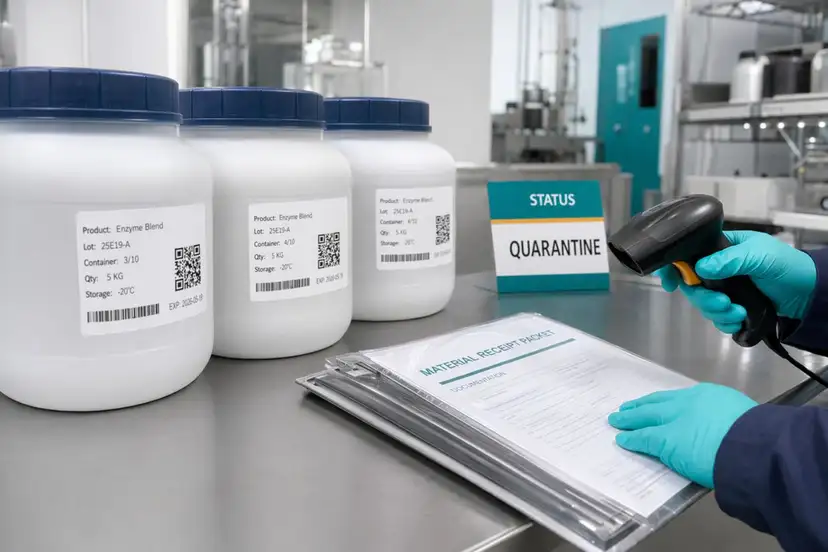
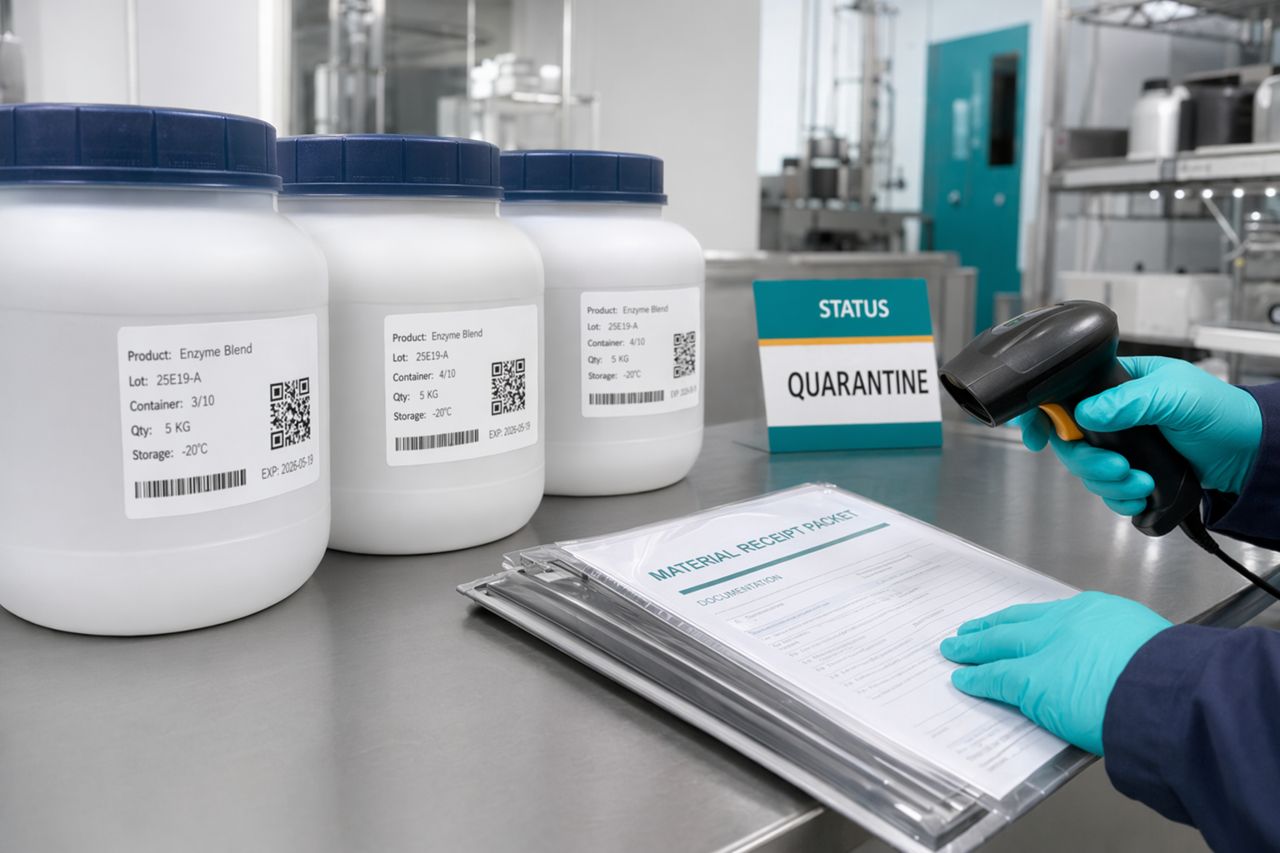
When enzyme material arrives at the reagent plant, receiving teams confirm more than quantity. They verify whether the lot can enter the site quality system.
A controlled receipt process may check:
- Supplier name and approved material identity.
- Lot number and manufacturing reference.
- Container integrity.
- Label consistency.
- Shipping condition indicators, where used.
- Document completeness.
- Match between purchase order, specification, and received material.
Until these items are reconciled, the lot should remain under quarantine or restricted status. This prevents informal movement into production and protects downstream release testing from avoidable ambiguity.
QA Review Before Production Input
QA review turns received material into accepted production input.
For enzyme raw materials, that review should confirm that the lot-specific data supports the intended reagent application. It should also confirm that any supplier notes, deviations, or changes have been evaluated before use.
Common review questions include:
- Does the lot meet the agreed specification?
- Is the documentation package complete and current?
- Are there open supplier changes or deviations?
- Does the material align with the validated reagent formulation?
- Are storage and handling conditions compatible with plant procedures?
- Is additional internal compatibility confirmation required before production use?
The goal is not to requalify the supplier on every shipment. The goal is to detect anything that could alter reagent performance before the lot reaches production.
Production Handoff: From Approved Lot to Batch Record
Once accepted, the enzyme lot becomes part of a manufacturing batch record. Production needs unambiguous instructions.
The batch record should identify:
- Approved enzyme lot number.
- Material status at time of use.
- Required storage condition and allowed handling window.
- Addition point in the process.
- Mixing and hold expectations defined by the site procedure.
- Any lot-specific handling note approved by quality.
Production teams should not interpret supplier documents during the run. Those decisions should already be resolved by QA and technical operations.
Release Testing Handoff
Release testing evaluates the finished reagent or intermediate against the plant’s controlled criteria. If release testing sees a shift, the investigation often turns back to raw material inputs.
A strong handoff makes that review faster.
Release teams need access to:
- Enzyme lot identity and internal material status.
- Supplier documentation retained for the lot.
- Prior lot comparison context, when available.
- Manufacturing batch linkage.
- Any approved deviations or change notices.
- Internal compatibility data relevant to the reagent format.
This traceability supports faster disposition decisions. It also gives procurement objective information when discussing supplier performance.
Cross-Functional Signoff Matrix
A practical signoff model assigns ownership without slowing routine purchasing.
Procurement Owns
- Supplier commercial onboarding.
- Forecast communication.
- Lead time and allocation monitoring.
- Purchase order accuracy.
- Escalation of supply disruption risk.
Quality Owns
- Supplier qualification status.
- Material specification approval.
- Document control.
- Incoming lot acceptance.
- Deviation and change assessment.
Production Owns
- Use of approved lots only.
- Execution against controlled batch records.
- Handling within approved process limits.
- Immediate reporting of material anomalies.
Release Testing Owns
- Finished reagent or intermediate evaluation.
- Trend visibility across batches.
- Escalation of unexpected performance shifts.
- Evidence for disposition decisions.
Technical Operations Owns
- Assay compatibility assessment.
- Formulation impact review.
- Lot transition planning.
- Technical response to supplier changes.
The matrix should be simple enough to use during routine production and clear enough to support an audit.
What a Supplier Should Make Easier
A bulk enzyme supplier should reduce friction across the handoff chain.
For diagnostic reagent manufacturers, that means:
- Consistent bulk lot supply aligned to planned manufacturing.
- Clear lot traceability.
- Controlled documentation packages.
- Practical support for supplier qualification.
- Transparent communication on lead times.
- Change-control support before changes affect routine production.
- Compatibility discussions focused on the customer’s reagent format.
Vitreline is structured for these requirements. We support procurement teams that need supply continuity and quality teams that need controlled evidence.
Common Handoff Risks to Remove Early
Risk: Documentation Arrives After the Material
If production planning depends on fast receipt, late documentation creates quarantine delays. Align the document package before the first routine shipment.
Risk: Supplier Change Notices Do Not Reach Technical Owners
A notice sent only to procurement may not be evaluated for reagent impact. Define change-control contacts across procurement, quality, and technical operations.
Risk: Lots Are Compared Only After a Release Issue
Lot transition planning should happen before production use. Maintain comparison context when moving from one enzyme lot to the next.
Risk: Forecasting Is Separated From Quality Planning
A supply shortage can force urgent qualification decisions. Share demand forecasts early enough to protect both inventory and validation planning.
Building the Right Supplier File
A useful supplier file is not just an archive. It is the reference point for every future handoff.
It should include:
- Approved supplier record.
- Current material specification.
- Quality or supply agreement, where applicable.
- Change-notification expectations.
- Lot documentation history.
- Complaint and deviation history.
- Contact map for commercial, quality, and technical issues.
- Review cadence for supplier performance.
This file helps new team members make the same decision as experienced team members. That is the purpose of controlled documentation.
How Vitreline Supports Reagent Plant Handoffs
Vitreline supplies bulk enzymes for diagnostic reagent manufacturing with a focus on controlled movement from purchase order to accepted production input.
Our support is built around:
- Bulk supply planning for routine reagent manufacturing.
- Lot-to-lot consistency expectations.
- Documentation suitable for supplier qualification and incoming review.
- Assay compatibility discussions without unnecessary method disruption.
- Lead time visibility for procurement planning.
- Change-control communication for regulated manufacturing environments.
We understand that purchasing an enzyme is only the first step. The material still has to pass through your quality system, production controls, and release testing process.
Request a Quote
If you are qualifying a bulk enzyme supplier or planning a lot transition for diagnostic reagent production, Vitreline can help define the supply and documentation package before your next purchase order.
Request a quote through the on-site form and include your enzyme target, application format, expected volume, documentation needs, and timeline.